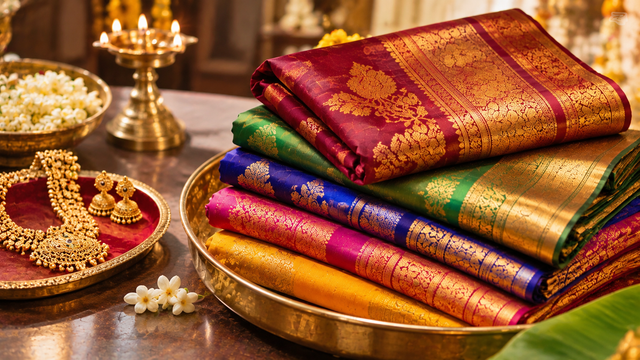
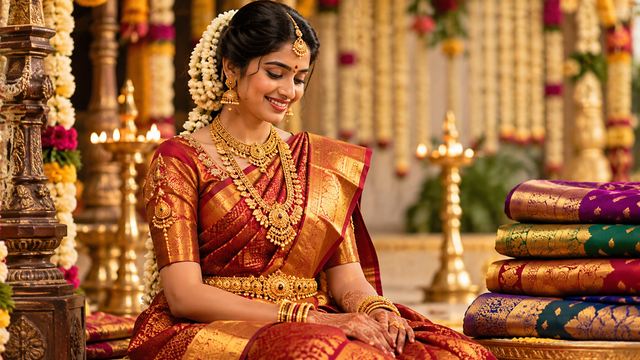
India is known for its rich textile heritage, and silk sarees hold a special place in its traditional fashion. From elaborate wedding sarees to lightweight silk varieties suitable for festive occasions, every region of India has its own weaving traditions, designs, colours, and cultural significance.
The different types of silk sarees in India reflect the country's artistic craftsmanship and regional identity. Some are recognised for their intricate zari work, while others are admired for their natural textures, traditional motifs, and distinctive weaving techniques.
Whether you are shopping for a wedding, festival, family celebration, or special occasion, understanding the varieties of Indian silk sarees can help you make a better choice.
In this guide, let's explore 10 popular traditional silk sarees in India, their unique features, and the occasions for which they are commonly preferred.
1. Kanchipuram Silk Sarees – A Symbol of South Indian Tradition
Kanchipuram silk sarees are among the most recognised traditional silk sarees in India. Originating from Kanchipuram in Tamil Nadu, these sarees are appreciated for their rich silk fabric, traditional patterns, and distinctive zari borders.
Common design elements include temple borders, peacocks, checks, floral patterns, and traditional motifs. Their rich appearance makes them a popular choice for South Indian weddings, religious ceremonies, and important family celebrations.
Kanchipuram silk sarees are particularly valued for their traditional craftsmanship and cultural importance.
2. Banarasi Silk Sarees – Known for Intricate Designs
Banarasi silk sarees originate from Varanasi, Uttar Pradesh. They are famous for their detailed brocade weaving, decorative motifs, and elaborate designs.
Traditional Banarasi sarees often feature floral patterns, paisley designs, and Mughal-inspired motifs. Gold and silver zari work adds richness to their overall appearance.
These sarees are commonly selected for weddings, receptions, and grand celebrations. Their detailed craftsmanship makes them a timeless addition to traditional wardrobes.
3. Mysore Silk Sarees – Simple and Elegant
Mysore silk sarees are traditionally associated with Karnataka. They are known for their smooth texture, elegant appearance, and relatively simple designs.
Many Mysore silk sarees feature minimal borders and subtle zari detailing, making them suitable for people who prefer understated traditional fashion.
They are often worn for festivals, religious occasions, family gatherings, and formal celebrations.
4. Paithani Silk Sarees – Famous for Peacock Motifs
Paithani silk sarees are a traditional textile of Maharashtra, particularly associated with Paithan.
They are recognised for their colourful designs, intricate borders, and decorative pallu. Peacock motifs, lotus patterns, and traditional geometric designs are commonly seen in Paithani weaving.
Their vibrant colours and artistic appearance make them a popular choice for weddings, festivals, and cultural celebrations.
5. Tussar Silk Sarees – Natural Texture and Rich Appearance
Tussar silk sarees are known for their distinctive natural texture and subtle golden appearance. They are produced using silk from certain wild silkworm species.
Unlike the smooth finish of many conventional silk fabrics, Tussar silk generally has a slightly textured surface.
These sarees are available in traditional and contemporary designs, making them suitable for festive occasions, cultural events, and elegant daytime functions.
6. Pochampally Ikat Sarees – Recognised for Geometric Patterns
Pochampally sarees originate from Telangana and are well known for their traditional Ikat weaving technique.
In this technique, yarns are tie-dyed according to a planned pattern before weaving. This creates distinctive geometric and symmetrical designs in the finished fabric.
Pochampally sarees are available in silk, cotton, and blended varieties. Silk versions are particularly appreciated for their colourful patterns and traditional appeal.
They are suitable for festivals, family functions, and occasions where distinctive ethnic fashion is preferred.

7. Chanderi Silk Sarees – Lightweight and Graceful
Chanderi sarees come from Madhya Pradesh and are known for their lightweight fabric and elegant appearance.
Traditional Chanderi textiles can be made using silk, cotton, and silk-cotton combinations. They often feature delicate motifs, fine borders, and subtle zari detailing.
Their lightweight nature makes them a popular option for daytime celebrations, festive gatherings, and traditional functions.
8. Baluchari Silk Sarees – Inspired by Traditional Stories
Baluchari silk sarees originate from West Bengal and are especially recognised for their detailed pallu designs.
Their decorative patterns often depict mythological stories, historical scenes, and traditional cultural themes.
The intricate weaving and artistic details make Baluchari sarees stand out among Indian silk saree varieties.
They are often preferred by saree lovers who appreciate traditional artwork and distinctive textile designs.
9. Assam Muga Silk Sarees – Known for Natural Golden Colour
Muga silk is traditionally associated with Assam and is known for its natural golden-yellow appearance.
The fabric has a distinctive texture and is valued for its traditional craftsmanship. Muga silk textiles are an important part of Assam's cultural heritage.
Muga silk sarees are commonly worn during traditional celebrations, cultural events, and special occasions.
Their unique appearance makes them different from many other silk saree varieties.
10. Gadwal Silk Sarees – A Blend of Traditional Craftsmanship
Gadwal sarees originate from Telangana and are known for their distinctive weaving characteristics.
Traditional Gadwal sarees often feature contrasting borders, decorative pallus, and intricate motifs. Some varieties combine silk borders and pallus with cotton bodies, while other designs use silk throughout.
Their distinctive construction and traditional appearance make them a valued choice for festive occasions, weddings, and religious celebrations.
How to Choose the Right Type of Silk Saree
With so many traditional silk sarees available, choosing the right one depends on your occasion, personal preferences, and budget.
Here are a few factors to consider before purchasing:
1. Consider the Occasion
For weddings and grand celebrations, richly designed Kanchipuram and Banarasi sarees are popular choices. For daytime functions, lightweight Chanderi or elegant Mysore silk sarees may be more suitable.
2. Check the Fabric Quality
Understand the fabric composition before purchasing. Check whether the saree is made from pure silk, a silk blend, or another material. Ask for relevant silk authenticity or quality documentation where applicable.
3. Choose a Suitable Colour
Traditional red, maroon, green, and gold shades remain popular for weddings and religious occasions. Pastel shades and subtle colours are also suitable for contemporary celebrations.
4. Pay Attention to the Border and Pallu
The border and pallu contribute significantly to a saree's overall appearance. Look at the weaving details, colour combinations, motifs, and finishing before making your selection.
5. Select a Design That Matches Your Style
Some people prefer traditional temple patterns and elaborate zari work, while others enjoy minimal designs and contemporary colour combinations. Choose a saree that complements your personal style.
Explore Traditional Silk Sarees at ARRS Silks Salem
Finding a saree that combines traditional craftsmanship, beautiful designs, and personal style makes shopping more enjoyable.
ARRS Silks Salem offers customers an opportunity to explore traditional ethnic fashion and saree collections for different occasions. Whether you are looking for an elegant silk saree for a family celebration or a traditional outfit for a festive event, exploring different designs can help you find a suitable choice.
When selecting a silk saree, take time to understand the fabric, design, colour, and craftsmanship. These details can help you choose a saree that remains special in your wardrobe for years.
Frequently Asked Questions About Traditional Silk Sarees
1. What are the most popular types of silk sarees in India?
Some popular varieties include Kanchipuram, Banarasi, Mysore, Paithani, Tussar, Chanderi, Gadwal, and Muga silk sarees. Each variety has its own regional weaving traditions and distinctive features.
2. Which silk saree is best for weddings?
Kanchipuram and Banarasi silk sarees are popular wedding choices because of their traditional designs, rich appearance, and decorative craftsmanship. The best option depends on personal preference and the wedding's traditions.
3. Which silk sarees are lightweight?
Chanderi sarees and some Mysore silk varieties are known for their relatively lightweight feel. However, the actual weight depends on the fabric, weave, and design.
4. What is the difference between Kanchipuram and Banarasi silk sarees?
Kanchipuram silk sarees are associated with Tamil Nadu and are known for traditional contrasting borders and distinctive zari weaving. Banarasi silk sarees originate from Varanasi and are recognised for intricate brocade designs and detailed motifs.
5. How can I identify a quality silk saree?
Check the fabric composition, weaving quality, finishing, and product documentation. Look for a genuine Silk Mark label where applicable and purchase from a reliable retailer who can explain the saree's material and origin.
Conclusion
The different types of silk sarees in India represent generations of traditional craftsmanship and regional textile heritage. From the rich appearance of Kanchipuram and Banarasi sarees to the lightweight elegance of Chanderi and Mysore silk, every variety offers something unique.
Understanding their characteristics can help you select a saree that suits your occasion, style, and preferences.
Explore traditional saree collections at ARRS Silks Salem and discover designs that celebrate the beauty of Indian ethnic fashion.