Why Is a South Indian Wedding Incomplete Without a Kanchipuram Saree?
Walk into any South Indian wedding hall an hour before the muhurtham, and you'll see it before you see anything else — the bride, wrapped in silk so rich it seems to hold its own light, gold zari catching the flash of a hundred phone cameras. Flowers wilt by evening. Music fades by midnight. But the saree stays. It gets folded, stored, and pulled out again twenty years later when a daughter gets married too.
That's the quiet power of the Kanchipuram saree. It isn't just what a bride wears — it's what a family remembers her in.
Quick Answer
A Kanchipuram silk saree is central to South Indian weddings because of its centuries-old weaving heritage from Kanchipuram, Tamil Nadu, its heavy pure silk and zari craftsmanship built to last generations, and its deep cultural association with auspicious occasions. It's as much a symbol of family and tradition as it is bridalwear.
Why Kanchipuram Sarees Are Tied to South Indian Weddings
Kanchipuram, a temple town in Tamil Nadu, has been weaving silk for longer than most of us can trace our own family trees. Generations of weavers there have refined a technique — heavier silk, thicker zari, a distinct three-shuttle weave for the border — that you simply can't rush or replicate overnight. That craftsmanship is exactly why the saree earned its place at the center of the ceremony, rather than on the sidelines of it.
Woven Into Tamil Heritage
For Tamil families, a Kanchipuram silk isn't a costume for one day. It's stitched into memory — the saree your grandmother wore, the one your mother saved for your naming ceremony, the one you'll eventually hand down. It says something about where a family comes from and what it values.
From Wedding Attire to Bridal Icon
Somewhere along the way, "wedding saree" and "Kanchipuram saree" became almost interchangeable in South India. The weight of the silk gives it presence under wedding lighting; the traditional motifs pair naturally with temple jewellery and the classic bridal bun. It looks like a wedding because, for generations, it's been at every wedding.
Why Families Still Choose It
Ask any mother shopping for her daughter's wedding saree and you'll hear some version of the same list:
· That unmistakable South Indian silk look
· A drape with real weight and texture, not something flimsy
· Zari work that catches light instead of sitting flat
· Borders and pallus with real character
· A colour range wide enough to suit any complexion or theme
· Photographs that hold up beautifully decades later
And unlike most wedding purchases, this one doesn't get packed away forever — it becomes something to wear again, or something to pass down.
What Makes a Kanchipuram Saree Special for a Wedding?
Pure Silk, Traditional Weaving
The silk itself carries the craftsmanship — a density and drape that's hard to fake. That said, not every saree sold under the "Kanchipuram" name is equal. Before you buy, ask about the silk grade, check for authenticity markers, and don't take the label at face value.
Zari That Does the Talking
Gold-toned or silver-toned zari worked into the border, pallu, and motifs is what gives the saree its festive glow. Want something more elaborate for the muhurtham and something quieter for the reception? The zari is where that choice happens.
Borders and Pallus With Personality
A contrasting border or an intricately worked pallu can change the entire character of the saree — from understated elegance to full bridal grandeur — without changing the base colour at all.
What Does a Kanchipuram Saree Symbolize in a South Indian Wedding?
Tradition and Family Heritage
Many families treat a wedding saree less like clothing and more like an heirloom in waiting. It gets preserved, sometimes literally wrapped and stored for the next generation.
Celebration and Auspiciousness
The richness of the silk and the warmth of the zari make the saree feel inherently festive — brides often lean into bold, vibrant shades specifically because the occasion calls for it.
A Thread to the Next Generation
Sometimes the choice isn't entirely the bride's own — a colour her grandmother wore, a motif her mother loved. That inherited detail is often what makes the saree emotionally significant long after the wedding day.
Why Are Kanchipuram Sarees Popular Among South Indian Brides?
The silhouette. Structured silk plus a detailed border creates a bridal silhouette nothing else quite matches.
The colour range. Red, maroon, green, pink, orange, purple, royal blue, gold — traditional or contemporary, there's a shade for every bride.
The jewellery pairing. Temple jewellery, jhumkas, gold bangles — a Kanchipuram saree was practically made to be worn with them.
The flexibility. Pair it with a modern blouse or minimal styling, and it moves easily from "traditional" to "your wedding, your way."
How to Choose a Kanchipuram Saree for a South Indian Wedding
Start with colour. Let your jewellery, blouse, and wedding theme guide you — red, maroon, and green are timeless, while pink, purple, and blue feel more contemporary.
Think about the border and zari. Heavier detailing reads as grand and traditional; a simpler border suits a bride who wants understated elegance.
Pick a motif that feels like you. Temple-inspired, floral, geometric — the motif shapes the personality of the saree as much as the colour does.
Match the saree to the function:
|
Wedding Function |
Suitable Saree Style |
|
Engagement |
Elegant silk with refined detailing |
|
Nalangu / pre-wedding |
Bright, comfortable, traditional |
|
Wedding / Muhurtham |
Rich bridal Kanchipuram silk |
|
Reception |
Contemporary silk design |
|
Post-wedding ceremony |
Traditional yet comfortable |
Kanchipuram Saree Colours and Their Bridal Appeal
· Red — the classic, unmistakably bridal choice
· Maroon — rich and quietly sophisticated
· Green — festive, vibrant, deeply traditional
· Pink — softer, contemporary bridal energy
· Gold — pure celebration
· Purple — regal and distinctive
· Orange — bright and energetic
· Blue — a modern reinterpretation of the traditional silk saree
Kanchipuram Saree vs Other South Indian Wedding Sarees
· Kanchipuram silk — Tamil wedding tradition, heavy silk, elaborate zari and borders
· Mysore silk — Karnataka heritage, smoother finish, understated elegance
· Chettinad cotton — Chettinad region, distinctive patterns, lighter cotton feel
There's no universal "best." It comes down to the bride's preference, the function, regional tradition, and the look she's going for.
How to Style a Kanchipuram Saree for a South Indian Wedding
Choose your blouse. Contrast colours, elbow-length sleeves, high necks, zari-work or embroidered blouses, or a modern cut — the blouse can match the saree or pull out a shade from the border.
Layer on the jewellery. Traditional gold — necklaces, earrings, bangles, waist belts — is the natural pairing.
Finish with the hair. A long braid woven with fresh flowers remains the classic South Indian bridal look, though plenty of brides now mix in modern styling while keeping the traditional accessories.
Where to Buy Kanchipuram Sarees for a South Indian Wedding?
Don't shop on colour alone. Look at seller reputation, silk quality, weaving details, zari specifications, and authenticity certification before you buy.
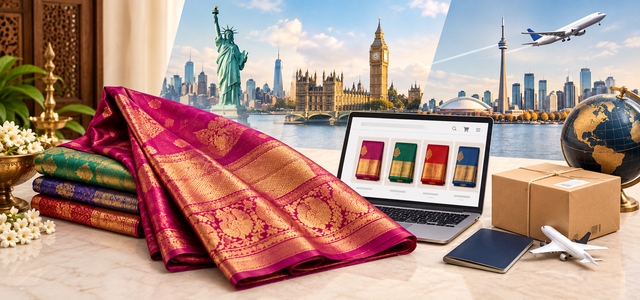
ARRS Silks' Kanchipuram saree collection brings together traditional and contemporary designs across colours and patterns suited to weddings and festive occasions — a solid starting point whether you want the classic bridal red or something more modern.
How to Care for Your Kanchipuram Wedding Saree
· Store it right — fold carefully, keep it dry, away from damp storage
· Keep it out of direct sunlight — prolonged exposure fades silk fast
· Refold periodically — prevents permanent creasing along the same lines
· Get it professionally cleaned — always follow the saree's specific care instructions
· Protect the zari — avoid friction and harsh cleaning agents
Why Kanchipuram Sarees Remain Relevant in Modern South Indian Weddings
Bridal fashion keeps shifting, but the Kanchipuram saree hasn't lost its place — brides are just wearing it differently now. Modern blouses, unconventional colour pairings, lighter jewellery — the saree bends to fit the bride, not the other way around.
That's really the saree's biggest strength: it can hold onto tradition and still feel personal. Generations from now, it'll still be doing both.
Frequently Asked Questions
Why is the Kanchipuram saree popular for South Indian weddings?
Its silk quality, zari craftsmanship, and centuries-long association with ceremonial dressing have made it the default choice for South Indian bridal wear.
Is a Kanchipuram saree suitable for the wedding ceremony itself?
Yes — it's the most commonly chosen saree for the muhurtham and main ceremony specifically because of its traditional bridal appearance.
What colour Kanchipuram saree is best for a bride?
There's no single best colour. Red, maroon, green, and gold are traditional; pink, purple, and blue suit a more contemporary bride.
How do I judge the quality of a Kanchipuram saree?
Check the silk grade, zari specifications, weaving details, seller reputation, and any authenticity certification before buying.
What jewellery pairs well with a Kanchipuram saree?
Traditional gold and temple-inspired jewellery — jhumkas, bangles, waist belts — pair naturally with the saree's border and zari work.
Final Thoughts
A South Indian wedding is full of things that don't last — flowers, music, the rush of the day itself. The Kanchipuram saree is one of the few things that does. Whether it's a classic red-and-gold drape or a contemporary shade, it carries the wedding forward long after the day is over — one fold, one memory, one generation at a time.