

How to Wash Silk Sarees at Home Without Damaging Them
Silk sarees should be washed gently with cool water and a mild detergent, but not every silk saree should be washed at home. Before washing, check the care instructions and test the fabric for colourfastness. For valuable Kanjivaram silk sarees, heavily embellished sarees and sarees with intricate zari work, professional cleaning is often the safer choice. If your saree is suitable for gentle hand washing, careful handling can help preserve its colour, texture and natural sheen.
Silk is a delicate natural fibre that needs thoughtful care. A little extra attention during washing, drying, ironing and storage can help your favourite saree remain beautiful for many years.
Why Do Silk Sarees Need Special Care?
Silk fibres are delicate and can be affected by heat, harsh detergents, prolonged soaking and rough handling. Improper washing can cause colour bleeding, loss of shine, stretching and damage to zari or decorative details.
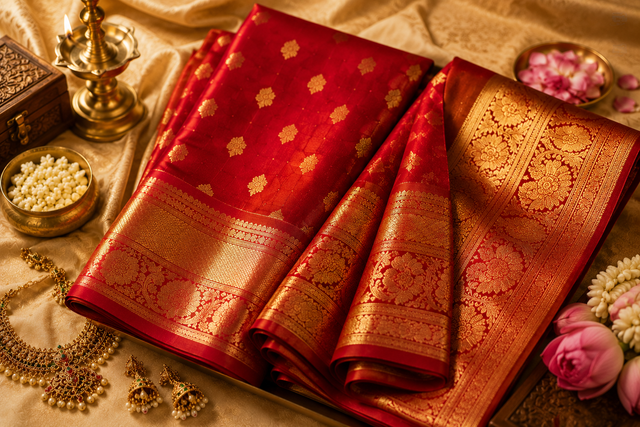
This is particularly important for traditional silk sarees such as Kanjivaram and Kanchipuram silk sarees, where the fabric, borders and zari work require careful handling.
The Central Silk Board recommends gentle washing, suitable detergents, careful rinsing and shade drying as important precautions when caring for silk.
Can You Wash a Silk Saree at Home?
Yes, some silk sarees can be gently hand washed at home when their care instructions permit it. Lightweight silk sarees without heavy embellishments are generally easier to care for at home.
However, expensive bridal sarees, heavily embellished sarees, sarees with extensive zari work and sarees that specifically say dry clean only should be handled according to their care instructions or taken to a professional cleaner.
When in doubt, professional cleaning is the safer option.
How to Wash Silk Sarees Step by Step
1. Check the Care Instructions
Before putting your saree in water, check the manufacturer's care instructions.
Look for information about:
• Hand washing
• Dry cleaning
• Water temperature
• Suitable detergents
• Drying instructions
If the saree is marked dry clean only, follow that instruction.
2. Test the Colour Before Washing
Colourfastness is especially important when washing brightly coloured silk sarees.
Take a hidden section of the saree and gently dab it with a clean white cloth moistened with cool water. If noticeable colour transfers onto the cloth, avoid washing the entire saree at home.
This simple test can help prevent unwanted colour bleeding.
3. Use Cool Water
Fill a clean basin with cool or room temperature water.
Avoid hot water because excessive heat can affect delicate silk fibres and may contribute to colour changes.
For silk saree washing, gentle water temperature is one of the simplest ways to reduce unnecessary stress on the fabric.
4. Choose a Mild Detergent
Use a small amount of mild detergent formulated for delicate fabrics.
Avoid harsh laundry detergents, bleach and strong cleaning chemicals. Too much detergent can also make rinsing difficult and leave residue on the fabric.
A gentle cleaning solution is enough for lightly soiled silk.
5. Wash the Saree Gently
Place the saree into the water and move it gently through the water with your hands.
Do not scrub the fabric aggressively.
Do not twist the saree.
Do not wring the saree.
Avoid rubbing one area repeatedly because friction can affect the surface of delicate silk.
The goal is to loosen dirt while keeping handling as gentle as possible.
6. Do Not Soak the Saree for Too Long
Prolonged soaking is unnecessary for silk sarees.
Keep the washing process short and gentle. Extended exposure to water can increase the risk of colour movement and unnecessary stress on the fibres.
7. Rinse With Clean Water
Drain the washing water and rinse the saree gently using clean cool water.
Continue rinsing until the detergent has been removed.
Do not squeeze or twist the saree aggressively while rinsing.
8. Remove Excess Water Carefully
Never wring a wet silk saree.
Instead, place the saree on a clean, soft towel and gently press or roll the towel to absorb excess moisture.
Silk is more vulnerable when wet, so avoid pulling or stretching the fabric.
9. Dry the Saree in the Shade
Dry your silk saree naturally in a cool, shaded and well ventilated area.
Avoid prolonged exposure to direct sunlight because sunlight can contribute to fading and may weaken delicate fibres over time. The Central Silk Board also recommends drying silk in the shade.
Allow the saree to dry completely before folding and storing it.
What Should You Avoid When Washing Silk Sarees?
Avoid these common mistakes:
• Hot water
• Harsh detergent
• Bleach
• Strong stain removers
• Aggressive scrubbing
• Twisting
• Wringing
• Long soaking
• Direct sunlight during drying
• Tumble drying
• Rough handling of zari work
These precautions are important because silk can lose its lustre or suffer fibre damage when exposed to unsuitable washing conditions.
How to Remove Stains From a Silk Saree
Treat stains carefully and as soon as possible.
First, gently blot the affected area with a clean, soft cloth. Do not rub the stain because friction can spread the stain and affect the appearance of the silk.
Avoid experimenting with household chemicals on valuable silk sarees. Strong chemicals can cause discolouration or damage.
For an expensive Kanjivaram silk saree, bridal saree or saree with intricate zari work, professional stain treatment is recommended.
Can You Wash a Silk Saree in a Washing Machine?
Machine washing is generally not the preferred method for valuable silk sarees. Agitation and spinning can place unnecessary stress on delicate fibres and decorative details.
If the manufacturer's care instructions specifically permit machine washing, use the gentlest suitable cycle, cool water and a mesh laundry bag. Always follow the care instructions supplied with the saree.
For expensive pure silk sarees and traditional Kanjivaram sarees, gentle hand care or professional cleaning is usually the more cautious approach.
How to Dry a Silk Saree After Washing
Drying is an important part of silk saree care.
After rinsing:
- Remove excess water gently with a clean towel.
- Keep the saree away from direct sunlight.
- Allow it to dry naturally in a shaded and well ventilated space.
- Make sure the saree is completely dry before storage.
Avoid using high heat because it can affect delicate silk fibres.
How to Iron a Silk Saree
If your silk saree needs ironing, use a low heat setting suitable for silk.
Turn the saree inside out and place a thin cotton cloth between the iron and the silk. Avoid pressing directly over delicate zari work.
The Central Silk Board recommends low to medium heat and advises ironing silk from the reverse side.
How to Store Silk Sarees After Washing
Proper storage helps protect your saree between occasions.
Store your silk saree in a clean, dry and well ventilated cupboard. A breathable cotton or muslin covering can help protect the fabric from dust while allowing air circulation.
For sarees with zari, wrapping the saree in cotton cloth can help protect the zari from discolouration.
Refold stored sarees periodically so that the same folds do not remain in place for too long.
Keep silk away from excessive moisture, direct light and insects.
How Often Should You Wash a Silk Saree?
Silk sarees generally do not need frequent washing.
After wearing the saree, allow it to air out before folding it. If it has only been worn briefly and has no visible stains or odour, unnecessary washing can be avoided.
When cleaning becomes necessary, choose the gentlest suitable method based on the fabric, embellishments and care instructions.
Silk Saree Care After Every Wear
A few simple habits can make a significant difference to long term silk saree care.
Air the saree after wearing it.
Keep perfume and deodorant away from direct contact with the fabric.
Treat spills quickly.
Avoid storing the saree while it is damp.
Fold and refold stored sarees periodically.
Keep valuable zari sarees protected from excessive moisture and light.
How to Care for Kanjivaram Silk Sarees
Kanjivaram silk sarees deserve extra attention because many feature rich zari borders, traditional motifs and detailed weaving.
For valuable Kanjivaram sarees, avoid unnecessary washing. Check the care instructions before cleaning and consider professional cleaning when the saree has heavy zari, embellishments or significant sentimental value.
If you are looking for authentic traditional silk, explore our collection of Kanchipuram Silk Sarees and discover handwoven sarees from ARRS Silks. ARRS Silks highlights GI certification and Silk Mark India certification across its silk collections.
Frequently Asked Questions About Washing Silk Sarees
What is the best way to wash a silk saree?
Gentle hand washing with cool water and a mild detergent is suitable for silk sarees when the care instructions allow it. Avoid rubbing, twisting, wringing and prolonged soaking.
Can I wash a pure silk saree at home?
Some pure silk sarees can be gently hand washed, but expensive sarees and sarees with heavy zari or embellishments may require professional cleaning. Always check the care instructions first.
Can I wash silk sarees with regular detergent?
Regular detergent is not recommended for delicate silk. Choose a mild detergent intended for delicate fabrics and use only a small amount.
How do I wash a silk saree without losing its colour?
Test the saree for colourfastness first, use cool water and handle the fabric gently. Avoid harsh detergents, prolonged soaking and direct sunlight.
Can I use hot water to wash silk sarees?
No. Cool or room temperature water is the safer choice for delicate silk. Hot water can increase the risk of fibre and colour damage.
Can silk sarees be washed in a washing machine?
Machine washing is not generally recommended for valuable silk sarees. If the care instructions permit it, use a delicate cycle, cool water and a protective mesh bag.
How should I dry a silk saree?
Remove excess water gently with a clean towel and allow the saree to dry naturally in a shaded, well ventilated area. Avoid direct sunlight and high heat.
How should I store a silk saree?
Store it completely dry in a clean, dry and well ventilated cupboard. Use breathable cotton or muslin for protection and refold the saree periodically.
Find the Right Silk Saree for Your Collection
Good silk saree care begins with understanding the fabric and following the right maintenance routine. Whether you own a traditional Kanjivaram saree for weddings or a pure silk saree for festive occasions, gentle handling can help preserve its beauty for years.
If you are planning to add another traditional saree to your wardrobe, explore ARRS Silks' collection. The collection includes handwoven silk sarees associated with Kanchipuram craftsmanship, with GI and Silk Mark India certification highlighted by ARRS Silks.
Quick Silk Saree Washing Checklist
• Check the care instructions
• Test colourfastness
• Use cool water
• Choose a mild detergent
• Wash gently by hand when permitted
• Avoid rubbing and scrubbing
• Never twist or wring
• Rinse thoroughly
• Absorb excess water with a clean towel
• Dry in the shade
• Iron on a low silk setting
• Store completely dry
A careful washing routine can help your silk saree retain its colour, texture and graceful appearance while reducing avoidable fabric damage.